





Top 10 micro inverter off grid Manufacturers and Supplier Brands
- Leading brands for off‑grid and microinverter solutions
- Brand overviews — what each company brings to micro inverter off‑grid projects
- Enphase Energy
- APsystems
- Hoymiles
- Chilicon Power
- Darfon Energy
- Victron Energy
- OutBack Power
- Sungrow
- GoodWe
- Fronius
- Why some mid‑to‑large projects prefer professional OEMs like Congsin
- About Congsin (what we offer for micro inverter off‑grid projects)
- How to choose the right brand or supplier for a micro inverter off‑grid project
- Common buyer questions
Summary: Buyers searching for micro inverter off grid are looking for reliable microinverter makers or hybrid/off‑grid inverter suppliers that support islanding, AC‑coupled battery backup, robust monitoring, and scalable distributed PV for remote or backup power. Typical pain points include mismatch between microinverter (grid‑tied) designs and true off‑grid needs, warranty & service in remote regions, certification/standards compliance, system scalability, and cost. This guide ranks 10 tier‑1 brands, compares headquarters and expertise, explains off‑grid applicability, and gives practical selection criteria for mid‑to‑large projects.
Leading brands for off‑grid and microinverter solutions
| Manufacturer | Headquarters Location | Key Expertise | Off‑grid / Relevance |
|---|---|---|---|
| Enphase Energy | Fremont, California, USA | Distributed microinverters, energy storage, monitoring | IQ microinverters with sunlight‑backup and AC‑coupled battery integration for limited microgrid capability |
| APsystems | Petaluma, California, USA (R&D) & China manufacturing | Multi‑channel microinverters, rapid MLPE development | High‑density microinverters suitable for resilient, modular PV arrays with AC‑coupled storage |
| Hoymiles | Shenzhen, China | High‑volume microinverter design, gateway monitoring platforms | Cost‑efficient microinverters widely used where AC‑coupling with hybrid inverters is chosen |
| Chilicon Power | Salt Lake City, Utah, USA | High‑efficiency microinverters, advanced MPPT per module | Designed for module‑level optimization; can be integrated into AC‑coupled battery systems for off‑grid projects |
| Darfon Energy | Taipei / Taiwan | Power electronics, microinverters and PV balance‑of‑system | Microinverter product lines tailored to residential and remote installations with focus on reliability |
| Victron Energy | SHB, The Netherlands | Off‑grid inverter‑chargers, battery management, hybrid systems | Leader in true off‑grid and hybrid inverters — pairs well with microinverters for AC‑coupled microgrid designs |
| OutBack Power | La Palma, California, USA | Rugged off‑grid inverter/chargers, system controllers | Heavy‑duty off‑grid hardware and controllers for large, remote systems where microinverters feed local AC buses |
| Sungrow | Hefei, Anhui, China | Utility & commercial inverters, hybrid storage solutions | Hybrid inverter platforms for AC‑coupled storage and backup — used in commercial off‑grid/hybrid projects |
| GoodWe | Shanghai, China | Hybrid inverters, residential & commercial ESS | Hybrid models offering off‑grid modes and seamless battery backup integration with AC inputs |
| Fronius | Wels, Austria | String and hybrid inverters, PV monitoring | Symo Hybrid and modular approaches support islanding and backup for small commercial/off‑grid setups |
Brand overviews — what each company brings to micro inverter off‑grid projects
When specifying systems that must combine module‑level conversion (microinverters) with off‑grid or backup capability, you need clarity on which brands deliver the necessary feature set: islanding/microgrid capability, AC‑coupled battery compatibility, robust monitoring, long warranties, and local service. Below are succinct, practical profiles of each brand and why they appear on this list.
Enphase Energy
Enphase is the market leader in microinverters and home‑energy systems. Their IQ series microinverters provide module‑level MPPT, per‑module monitoring, and—importantly for off‑grid use—Enphase has introduced microgrid‑capable features (e.g., sunlight backup and islanding logic) when combined with Enphase AC‑coupled batteries. For buyers, Enphase stands out for proven field reliability, mature monitoring platform, and strong global warranty support. See company and technology context on Enphase Energy (Wikipedia) and microinverter basics on Microinverter (Wikipedia).
APsystems
APsystems focuses on multi‑channel microinverters that lower per‑panel cost by hosting multiple MPPT channels per enclosure. They are widely deployed in residential and light commercial projects. For off‑grid designers who want distributed generation with AC coupling, APsystems offers a cost‑effective option and a reliable monitoring gateway for managing microinverter clusters.
Hoymiles
Hoymiles offers high‑volume, competitively priced microinverters and an associated gateway/EMS. Its products are attractive where budget and scalability are prioritized. For off‑grid applications designers typically pair Hoymiles microinverters with hybrid inverter/ESS platforms via AC coupling to create resilient backup systems.
Chilicon Power
Chilicon Power emphasizes high efficiency and advanced MPPT algorithms at the module level and has strength in optimizing partial‑shade performance. Project teams consider Chilicon when module‑level control is critical and AC‑coupled storage is used for islanding.
Darfon Energy
Darfon is an established manufacturer of power electronics, and their microinverter lines focus on reliability and thermal management — key for remote deployments. Buyer's advantage is product robustness in demanding climates and a portfolio that integrates well with standard AC‑coupled storage hardware.
Victron Energy
Victron is a specialist in true off‑grid and hybrid inverter/charger systems, battery management, and system controllers. Victron does not primarily make microinverters, but its off‑grid platforms are often the preferred destination for AC‑coupled microinverter arrays when real islanding, high‑current battery management, and advanced system control are required. See company background at Victron Energy (Wikipedia).
OutBack Power
OutBack is known for rugged, field‑serviceable off‑grid inverter/charger systems and controllers tailored to telecom, remote communities, and microgrid projects. When projects need durable off‑grid inverters to accept AC input from microinverter clusters, OutBack is a go‑to brand.
Sungrow
Sungrow is among the largest inverter manufacturers globally and provides hybrid and ESS solutions for commercial and utility scales. Sungrow hybrid inverters support AC‑coupled architectures useful in off‑grid or islandable microgrid scenarios.
GoodWe
GoodWe supplies hybrid inverters and storage products focused on residential and commercial segments. Their off‑grid and backup modes make them a natural partner for microinverter front‑ends in AC‑coupled designs seeking modular expansion.
Fronius
Fronius offers high‑quality string and hybrid inverters with reliable monitoring and backup capability. For smaller commercial and off‑grid systems where module‑level optimization may be paired with Fronius hybrid control, they are often specified for their diagnostics and service network.
Why some mid‑to‑large projects prefer professional OEMs like Congsin
Top‑brand microinverters offer proven performance and brand assurance, but larger projects often face substantial brand High Qualitys, constrained lead times, or feature sets that don’t match bespoke project requirements (custom ratings, integrated control, or specific certifications). Professional source manufacturers can deliver cost‑efficient, customizable equipment at scale with direct OEM/ODM support and controlled quality processes. This is why many engineers and procurement teams evaluate manufacturers beyond marquee names when specifying off‑grid microinverter or hybrid systems.
About Congsin (what we offer for micro inverter off‑grid projects)
- 27+ years manufacturing experience in DC→AC inverters, portable power and solar charge controllers—capable of supplying customizable microinverter and AC‑coupled hybrid modules for off‑grid installations.
- Automated production, ISO‑grade quality controls, and international approvals (CE, EMC, LVD, ETL, FCC, RoHS) to support exportable off‑grid solutions without brand High Quality overhead—suitable for mid‑to‑large projects and OEM channels.
- Flexible OEM/ODM, private label, and technical customization for system‑level requirements (islanding logic, AC input/output configurations, communication protocols) and global after‑sales support.
How to choose the right brand or supplier for a micro inverter off‑grid project
Use the following checklist when comparing suppliers: compatibility with AC‑coupled battery systems, explicit islanding/microgrid support, documented certification to interconnection and safety standards (e.g., IEEE 1547 and relevant IEC safety standards), proven field reliability in your climate, accessible local service and warranty fulfillment, and integration options for monitoring and EMS. For reference, interconnection standards such as IEEE 1547 define requirements for distributed energy resources and should inform design and product selection. Quality systems such as ISO 9001 are typical procurement requirements for mid/large projects.
Common buyer questions
- Can microinverters be used off‑grid? — Microinverters are primarily grid‑tied devices; however, some modern microinverters (or systems combining microinverters with hybrid inverters/batteries via AC coupling) can support islanding or limited backup. Verify the product’s microgrid/islanding capability before specifying.
- Do I need hybrid inverters for off‑grid with microinverters? — Yes, for sustained off‑grid operation you typically need a hybrid inverter/charger or an off‑grid inverter to manage batteries and loads; microinverters supply AC that can be aggregated and routed through the hybrid unit.
- What certifications are critical? — Safety (IEC 62109 family), interconnection (IEEE 1547 or local grid codes), and factory quality management (ISO 9001) are key for reliable off‑grid deployment.
- How should I size microinverters for remote installations? — Size per‑module power to match PV module STC ratings, consider derating for temperature, allow headroom for surge/startup loads, and plan battery capacity and hybrid inverter continuous/peak ratings to match critical loads.
For project quotes, technical datasheets, or to discuss custom microinverter/off‑grid configurations, contact our team at www.csinverter.com or email info@csinverter.com.
Relevant industry and technology references cited in this guide: Microinverter overview (Wikipedia), Enphase Energy (Wikipedia), IEEE 1547 interconnection standard, Victron Energy (Wikipedia), and ISO 9001 quality management.

7 Critical Errors Your LED Display is Telling You: A 2026 Modified Sine Wave Troubleshooting Manual
Sizing Off-Grid Inverters: Calculate Load, Battery & Solar Needs
Top 5 pure sine wave inverter Company List and Products Compared
Top Off-Grid Solar Inverters for Homes, Cabins and RVs
Distributor
How long does it take to become an authorized distributor?
The process typically takes 2-4 weeks, depending on the discussion and agreement finalization.
What kind of support can I expect from Feifan after becoming a distributor?
You will receive ongoing sales support, product training, technical assistance, and marketing resources to ensure your success.
Modified Sine Wave Inverters
Which regional plugs can be used with the universal socket?
The universal socket supports most national plug specifications, such as GB, US, EU, etc. (some require adapters), and can meet the use of devices in multiple regions.
Can this inverter support both 12V and 24V inputs
Yes, it can work with different voltage systems via selectable input terminals.
Pure Sine Wave Inverters
What is the difference between labeled 6000W and full power 3000W?
Labeled 6000W is peak power, which is only used to cope with the instantaneous high-power demand during device startup (such as air conditioner, motor startup); full power 3000W is continuous power, referring to the power that the device can stably output for a long time. When driving appliances daily, 3000W should be used as a reference to avoid total power overload.
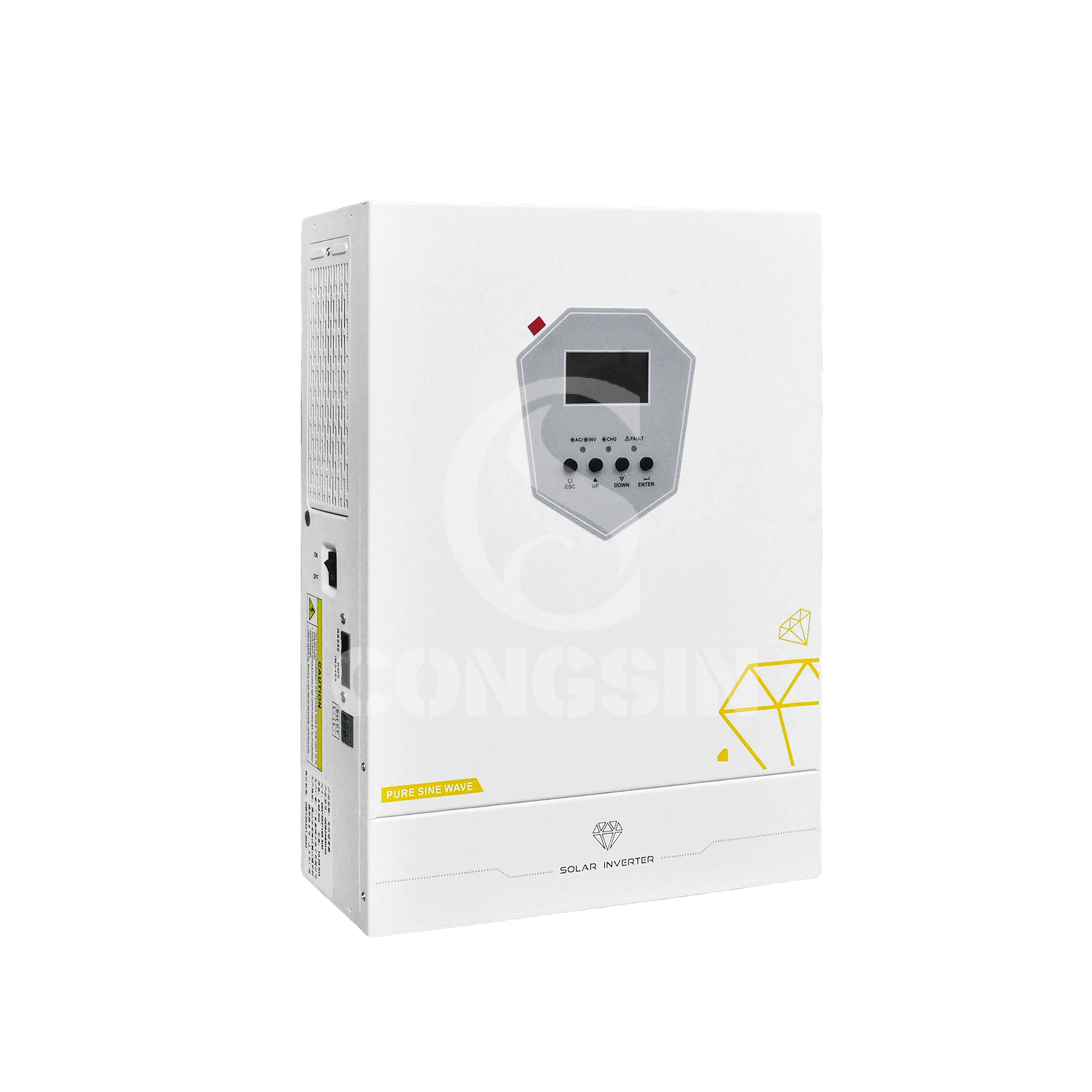
Factory Direct Sales 6000W Hybrid Solar Power Inverter with Controller and LCD Display
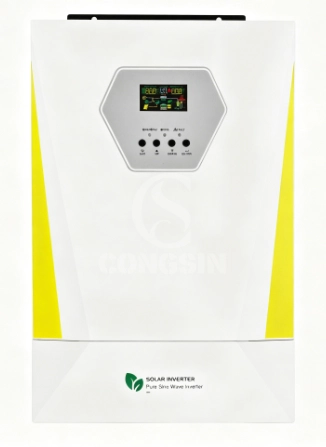
Congsin 4000W and 6000W Hybrid Inverter with Controller with LCD Display and CE Certification Solar
Power your solar system efficiently with the Congsin 4000W and 6000W Hybrid Inverter. Featuring an integrated MPPT Controller, this CE Certified inverter ensures optimal energy conversion. Monitor performance effortlessly via the intuitive LCD Display. Reliable, powerful, and ready for your sustainable energy needs.
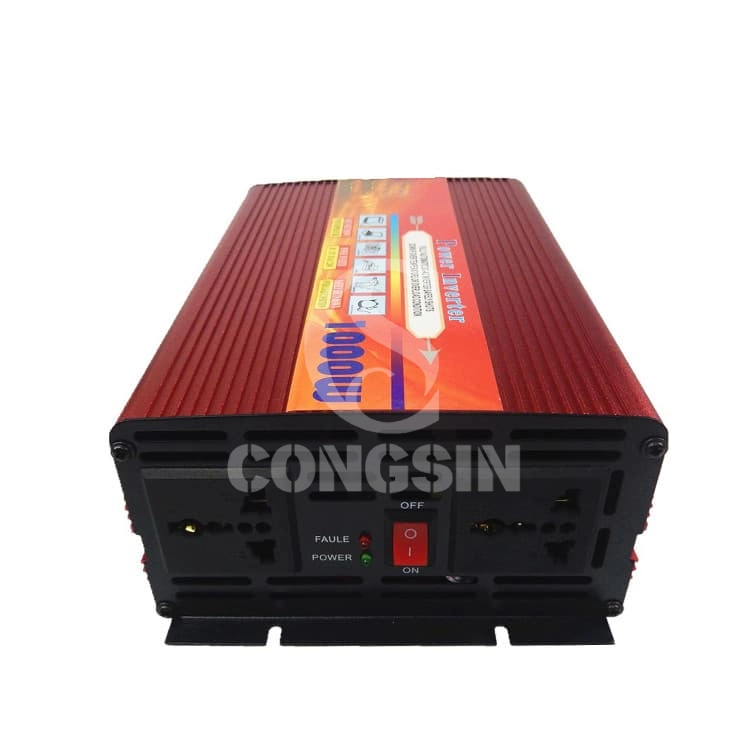
Congsin Manufacturer Wholesales Big Capability Modified Sine Wave Inverter with Red case and Double fan
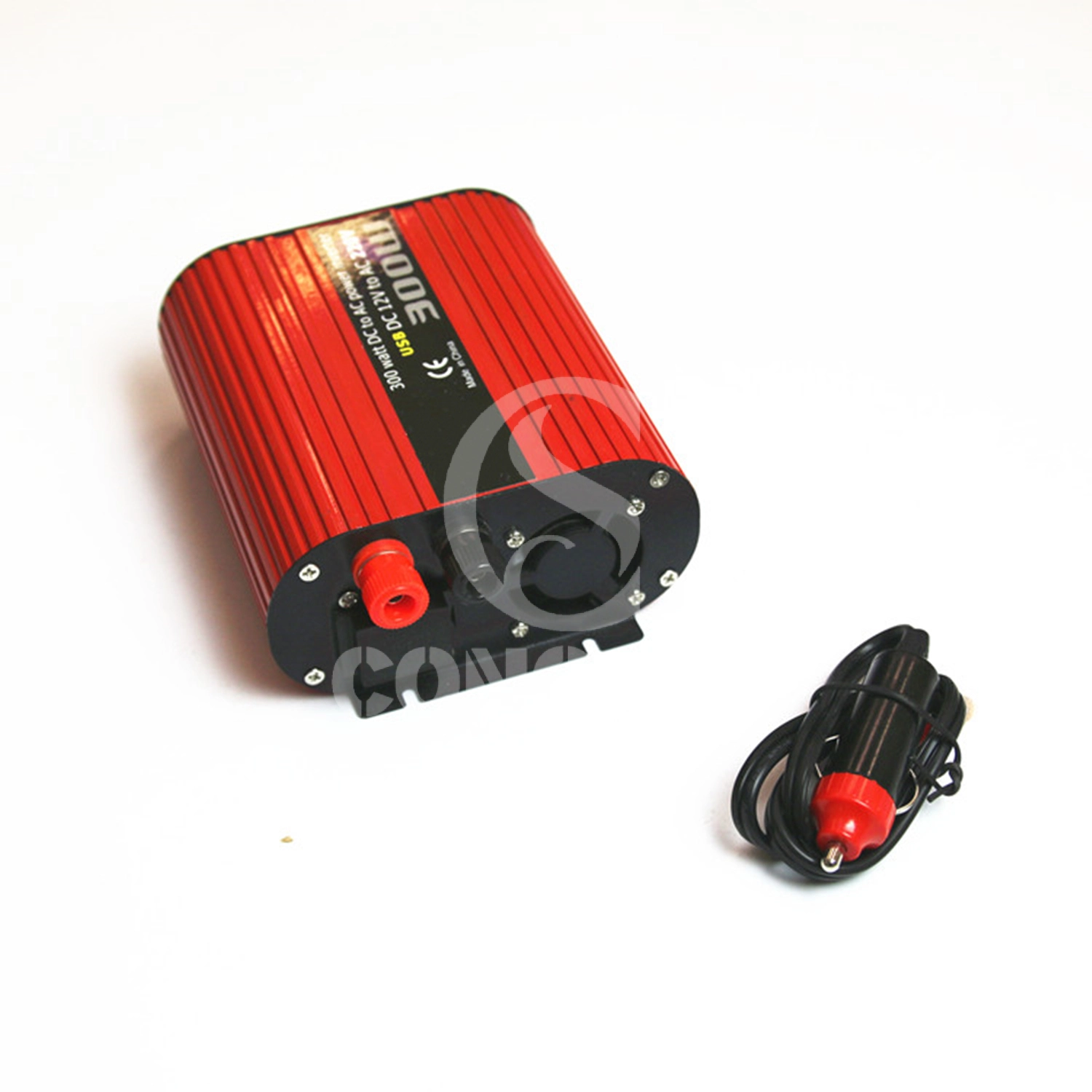
Factory Direct Sales Portable 150W Modified Sine Wave Inverter DC12V to AC220V Off-grid Sine Wave Inverter with Two USB and Universal Socket
Congsin's Portable 150W Modified Sine Wave Inverter powers your journey! This versatile Car Power Inverter with USB acts as a reliable 12V to 220V converter, ensuring an essential off-grid power supply. With dual USB ports and a universal socket, enjoy convenient power on the go.

CONGSIN is a trusted OEM factory for power inverters, solar charge controllers, and DC converters. Reliable solutions for global B2B buyers.
 High Quality
 7/24 Service
 Guaranteed Warranty
© 2025 Congsin. All Rights Reserved.
 WeChat
 Scan QR Code
sin cong
teaimei10
Whatsapp: +8618028086791
Scan QR Code